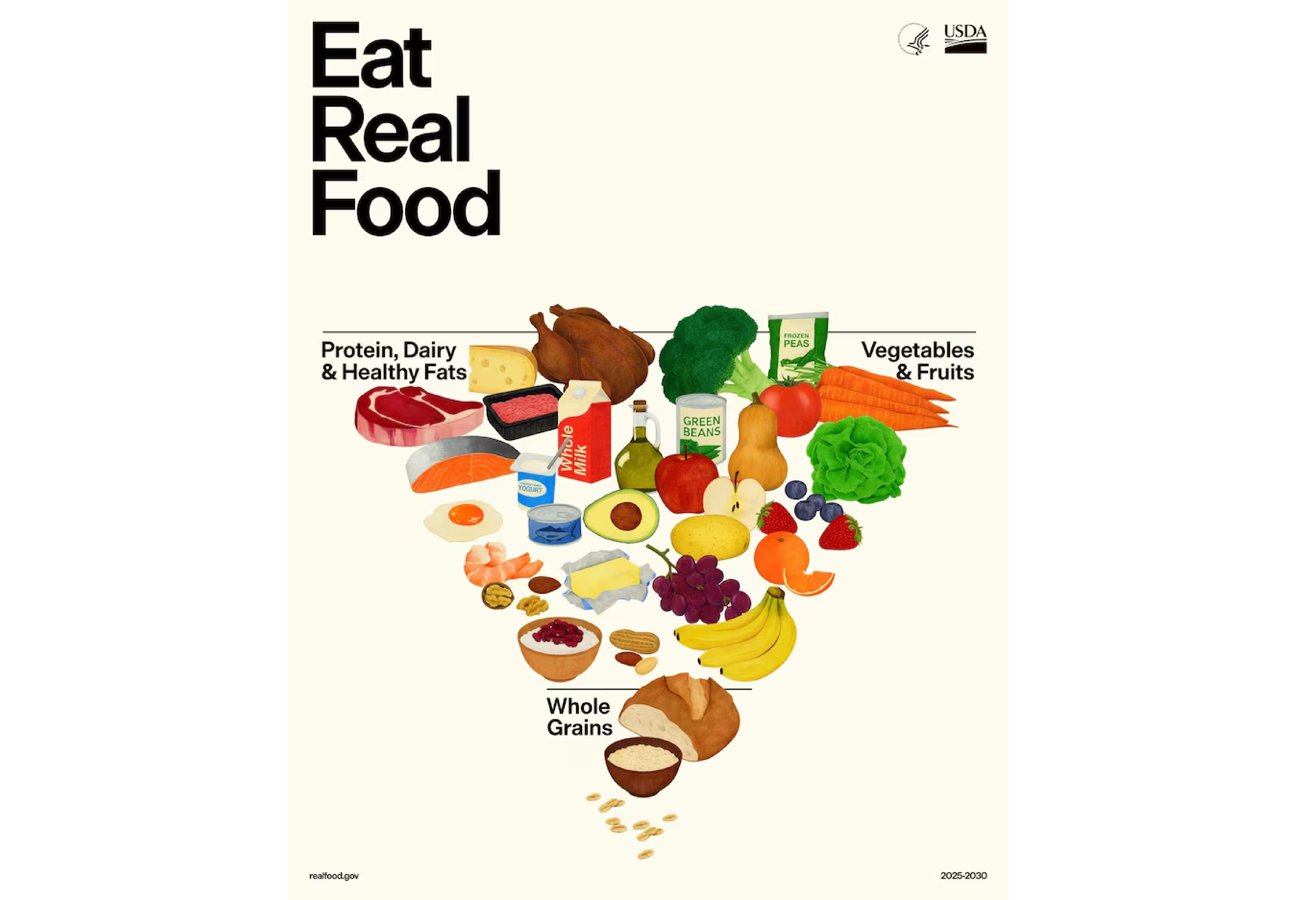
Since the release of the new food pyramid, people have a lot of questions. Especially about saturated fat. Below are a few of the most common ones — and how I think about them in practice. And I’ll share the one question you should be asking.
Is saturated fat healthy now?
When you think of saturated fat as one nutrient that’s going to make an impact, the body of evidence leans toward a risk for cardiovascular disease. But from my perspective, as a practitioner, I look at the whole picture and say, okay, if there is higher saturated fat, what does the rest of the diet look like?
You can find good evidence that people who are eating more plant-based foods, more fiber, could offset a little bit of saturated fat.
I'm not saying it means that we should relax the guidelines. There's a good amount of evidence that saturated fat itself is not great for cholesterol levels.
My cholesterol is great. Can I stop worrying about saturated fat?
I primarily worry that people will think they can eat as much saturated fat as they want and not be mindful of eating more plants and fiber.
The effects of adding or limiting saturated fat is not a singular focus for me when I’m working with a client.
I work out. What are my new rules?
When I’m working with someone, whether it’s for weight loss or to improve cardiovascular risk factors or helping get them fueled for a triathlon, my approach is always in the context of their bigger health picture.
What does life look like day-to-day? What’s their daily caloric intake? Is their diet whole food plant-based with enough fiber? Is their cholesterol normal? What does exercise look like?
Does anyone get to eat more saturated fat?
If you're doing all those things very well, then it may not matter that much to have higher saturated fat intake.
If the new pyramid wants to emphasize more whole foods and minimally processed foods, then I totally get that. But I think what the American public will interpret this in a million ways and potentially use it as a free pass to load up on the butter and the meat. Not to mention continue to see low fiber intake.
But I don't think we are doing all of those things well. So why are we liberalizing saturated fat? That's really my simple bottom line.
Do calories still matter?
All fats have the same calorie density, 9 calories per gram.
If you mindlessly increase the saturated fat, you’re just going to keep increasing calories.
I would expect it to lead to more weight gain.
But aren’t processed foods the real problem?
Processed foods aren't great, but the real root of the issue is less about micro-ingredients and more that we eat too much of them. They're high in super palatable ingredients like sugar, salt and fat, which leads to over consumption of them.
It sounds like the new food pyramid isn’t a big deal for you…
To be honest, it won't change what I do.
I don't meet with clients looking at one nutrient exclusively and determining an entire plan for them based off of one nutrient that they need to lower down.
It’s encompassing the entire person.
OK. What should I actually be asking myself?
The question most Americans need to ask themselves isn’t “Where’s the Beef?” It should be “Where are the Vegetables?”
The benefits that you would get from consuming plant-based foods, with their phytochemicals and prebiotic fiber and general dietary fiber, in combination with a food that may have saturated fat would potentially still leave you at a much lower risk for cardiovascular disease and certain cancers.